
Mountain profile
300 km
Tignes is a ski resort in Savoie, in the Tarentaise Valley, linked with Val d’Isère.

Savoie, France
Pistes & Runs

161 Runs
Beginner
Green
13.0%
21 runs
Intermediate
Blue
40.4%
65 runs
Advanced
Red
25.5%
41 runs
Expert
Black
19.9%
32 runs
Available 70 lifts on the routes
Mountain profile
300 km
Tignes is a ski resort in Savoie, in the Tarentaise Valley, linked with Val d’Isère.
Savoie, France
Pistes & Runs
161 Runs
Beginner
Green
13.0%
21 runs
Intermediate
Blue
40.4%
65 runs
Advanced
Red
25.5%
41 runs
Expert
Black
19.9%
32 runs
Available 70 lifts on the routes

Experience the mountain
Every Skill. Every Style. Every Adventure.
Overall Rating
9.0/ 10
Build confidence
Beginners
The resort provides beginner zones and progression routes, but you'll get the most out of Tignes once you're linking confident turns on blues.
Refine your technique
Intermediates
Tignes has lots of varied blues/reds across sectors, with plenty of mileage and easy ways to explore without constant 'survival skiing.'
Push your limits
Advanced
With a big menu of steeper pistes, plus high-mountain terrain, Tignes is a great place to keep pushing.
Master every descent
Snowboarders
Tignes offers excellent variety, parks, and reliable snow. A few exposed areas can get windy/firm, but overall, it rides very well.
overview
Everything You Need To Know About Resort
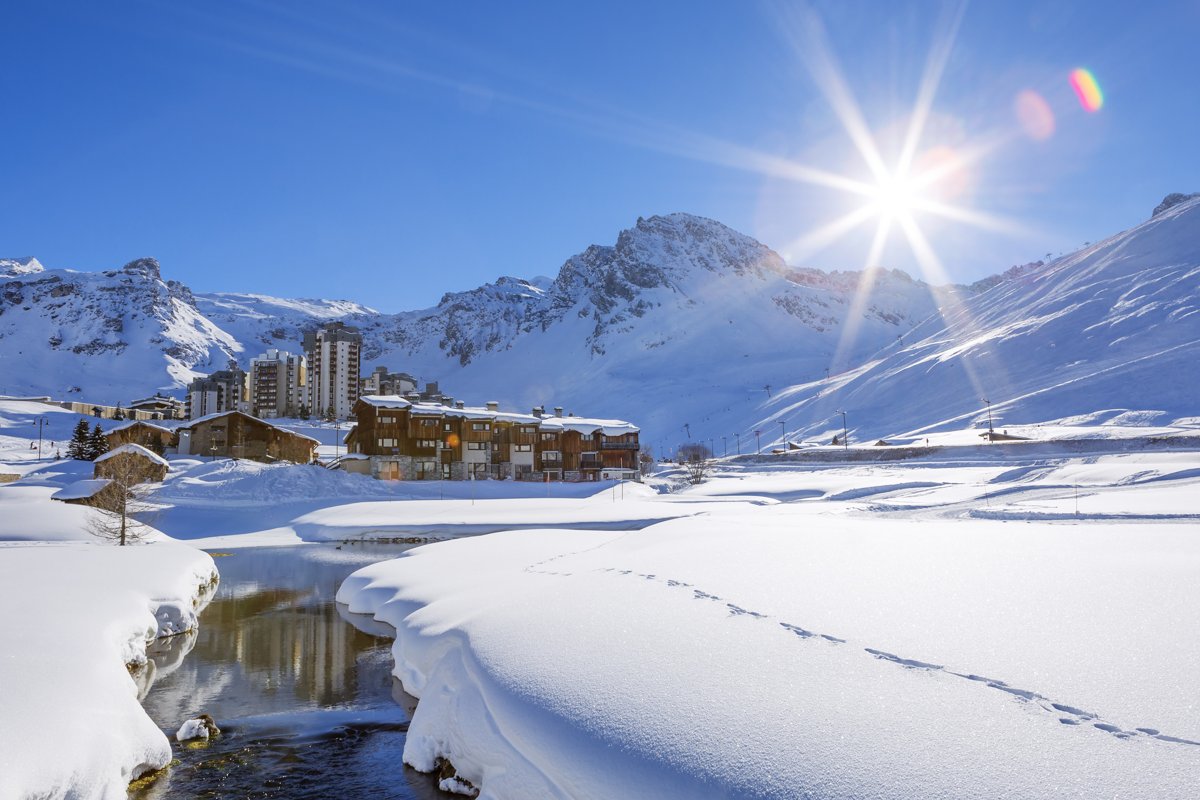
Tignes is a ski resort in Savoie, in the Tarentaise Valley, linked with Val d’Isère. It is made up of five villages between 1,550m and 2,150m: Les Brévières (1,550m), Tignes 1800/Les Boisses (1,800m), Le Lavachet (2,050m), Le Lac (2,100m) and Val Claret (2,150m). Le Lac sits beside Lac de Tignes, and in winter, the frozen lake can be used as a pedestrian link between Le Lac and Val Claret (when conditions allow).
The resort’s layout is closely tied to its history. The historic village of Tignes in the valley was submerged in 1952 when the dam was created, forming the Lac du Chevril reservoir. The resort then developed higher up the mountainside. Tignes 1800 opened in December 2013 and is organised around its church, which is a replica of the church from the former village. Les Brévières is the lowest village and sits below the dam, with larch woodland in its ski sector.
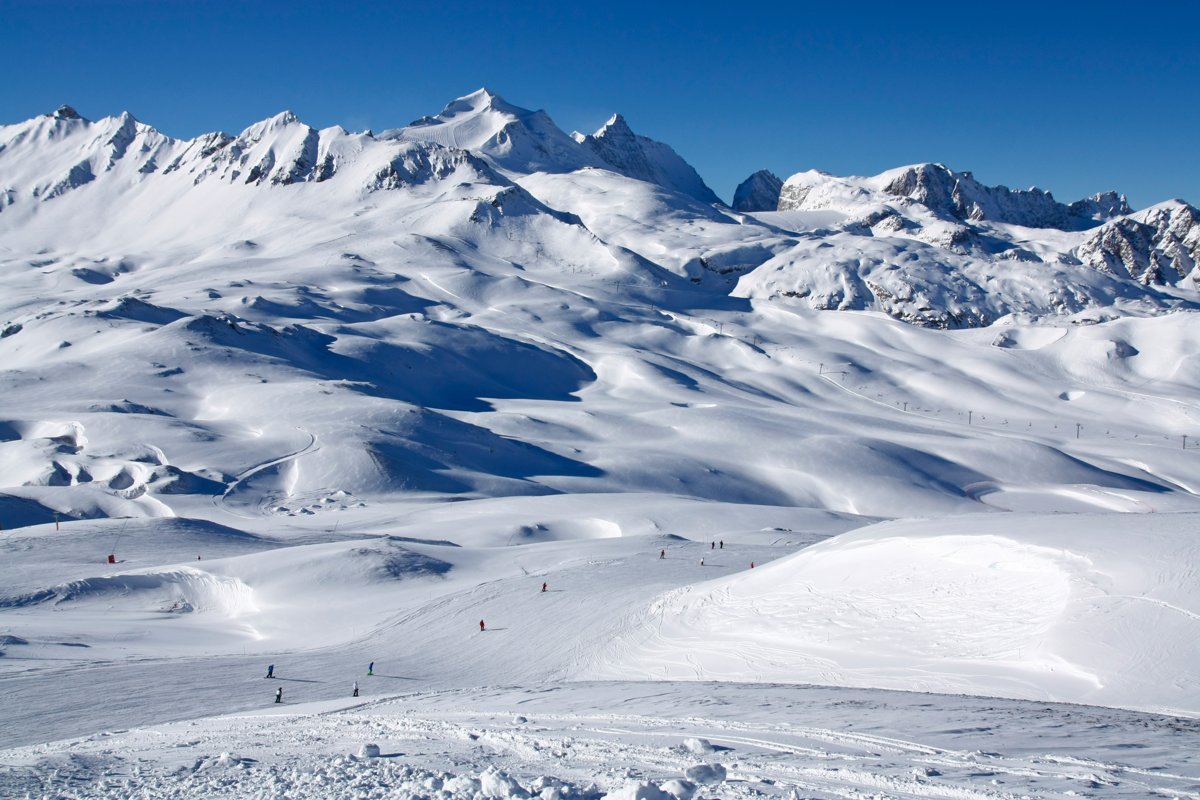
The Tignes–Val d’Isère ski area offers more than 300km of marked pistes between 1,550m and 3,456m, served by more than 70 lifts. Grande Motte is reached via the Perce-Neige funicular (to 3,032m) and the Grande Motte cable car (to 3,456m). From the panoramic terrace at altitude, there are views towards surrounding peaks and the Mont Blanc range. Tignes also offers summer skiing on the Grande Motte glacier on selected dates, subject to conditions.
Skiing combines high, open terrain around Val Claret, Le Lac and the Grande Motte sector with lower, more sheltered runs in the Boisses and Brévières areas. For day-long variety, lift links join Tignes and Val d’Isère. The connection operates via the Tommeuses chairlift over the Col de Tovière, and also via the Borsat chairlift with a ski link through the Col de Fresse.
Beginners and families have dedicated learning zones in each village, including free beginner lifts and gentle areas designed for progression. Freestyle riders have a snowpark and other designated fun areas. The resort also promotes freeride terrain, although off-piste skiing should only be approached with appropriate skills, equipment and local knowledge.
Away from skiing and snowboarding, Tignes offers winter activities including sledging, snowshoeing, paragliding and ice diving on the lake (depending on ice conditions). Le Lagon is the resort’s aquatic and wellness centre, with swimming and relaxation areas plus fitness and weights rooms. Tignespace is a sports and conference centre with an FFME-approved climbing wall, indoor sports facilities and activities such as trampolining. For evenings and bad weather days, Tignes has a two-screen cinema, bowling, a games room with billiards and an internet café, and the Panorama cultural centre.
Getting around is supported by free shuttle-bus circuits linking the villages. Parking is regulated, with around 3,500 spaces from Les Brévières to Val Claret, and the resort publishes paid winter parking periods.